

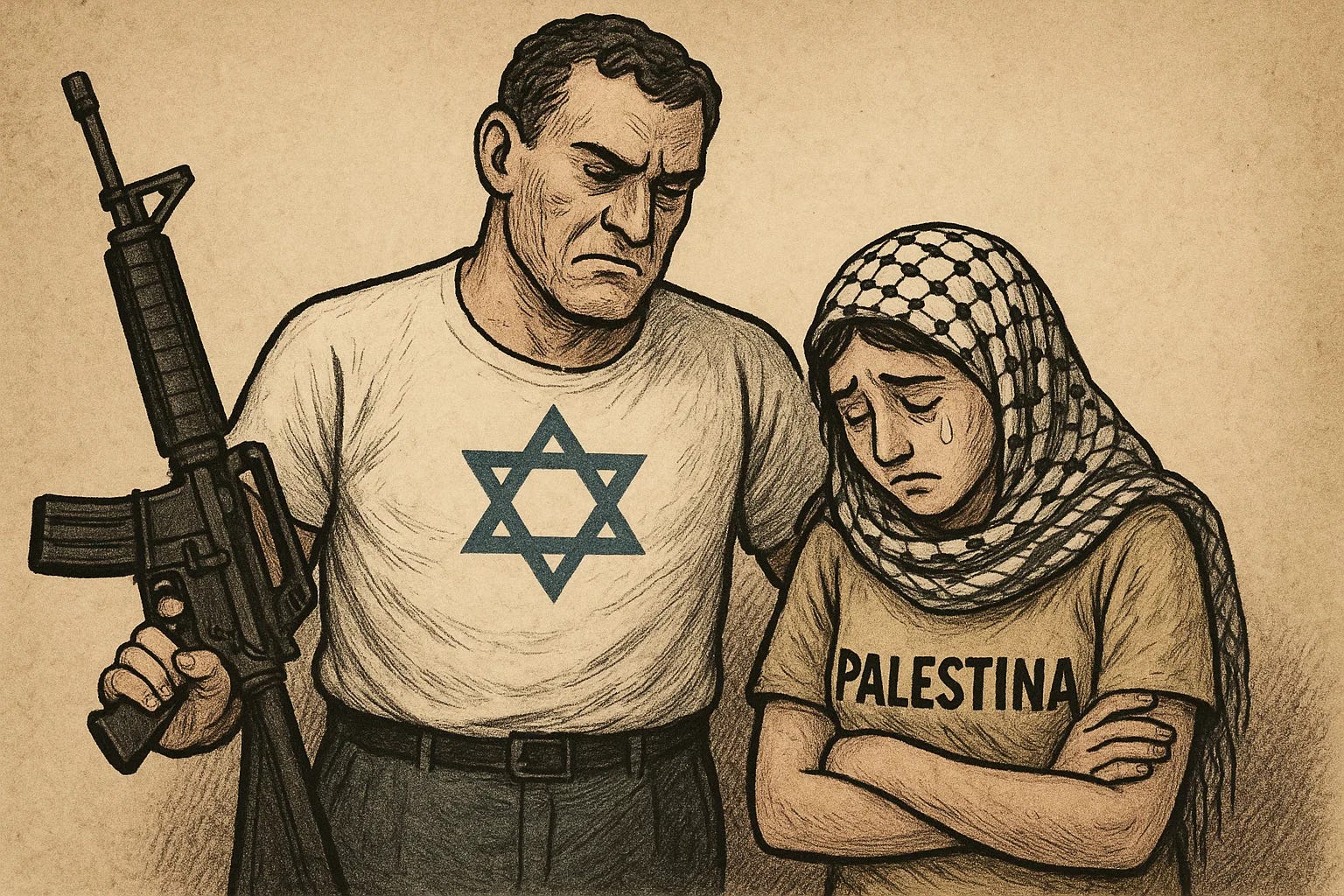

Die repliek van Paula Slier op Martie Momberg, 15 Julie 2025, verwys. Slier dink seker daar is nog mense wat sal val vir die ou narratief.
Slier verloor uit die oog dat die Palestyne nie na Europa, Rusland of die Ukraïne gereis het om Jode daar te gaan aanval het nie. Die Palestynse Jode, Christene en Moslems het in relatiewe vrede met mekaar gelewe, totdat die Jode van oraloor begin opdaag het.1
Elke probleem wat daar bestaan, kan teruggevoer word na die aankoms van daardie inkommer Jode. Dit het onder andere die volgende meegebring:
Die welvaart uit die Dooie See het in die hande van die inkommers geval. Dit sluit veral potas in, wat gebruik is vir die vervaardiging van lense, seep, skrapnel poeier, handgranate, asook vir gebruik in weefwerk.
'n Jood van Rusland, ene Novoimensky, het dit vir homself toegeëien teen 1925.
Die konsessie vir die ontwikkeling van water en elektrisiteit is toegeken aan die inkommer Jood van Rusland, ene Rustenberg. Hy het die monolopie vir 77 jaar gehad. Geen Arabier het 'n kans gestaan nie.
Die Tiberias warmwaterbronne wat eens aan Arabiere verhuur is, is oorgedra aan 'n Joodse maatskappy.
Die normalisering van terrorisme kom van die Irgun en Haganah bendes. Die doel was om alle Britse weerstand teen die inkommer Jode se geweld te vernietig.
Bruce Hoffman se doktorale tesis aan die Universiteit van Oxford “Jewish terrorist activities and the British government in Palestine, 1939-1947” beeld duidelik die geweld uit. Dit sluit in die sinking van die SS Patria (met Jóde aan boord!), die ontvoer en ophang van soldate, en die bombardering van die King David Hotel deur Jode wat hulleself soos Arabiere vermom het.
Dit verduidelik ook hoekom oud-Koningin Elizabeth nóóit vir Israel besoek het nie.
Die slagting van Deir Yassin se mense, nog vóór staatswording, en die res van die Nakba, met ander woorde die uitmoor van 15,000 Palestyne, en die vernietiging van 500 Palestynse dorpies, onder andere Iqrit, 'n Christendorpie.
Israel het Plan Dalet geformuleer, om van die Palestyne ontslae te raak.
Die stelselmatige onteiening sonder vergoeding van Palestynse families, en die verbod op bouwerk, sodat jong paartjies nie hulle eie woonplekke kan kry nie.
Bestaansreg vir Hamas as vryheidsvegters.
Die opkoms van die selfmoordbomaanvallers wat Simson van die Bybel se voorbeeld gevolg het.
Nog erger: die verradderlikheid van Israel teenoor hulle weldoeners word duidelik uit insidente soos die Lavon Affair, toe Egiptiese Jode in 1953 in opdrag van Israel bomme in Kairo se strate en biblioteke geplant het. Hulle het gehoop dat Britte en Amerikaners sou seerkry, sodat die Arabiere die skuld kon kry! In hierdie geval is hulle egter darem betyds uitgevang.
Dosyne Amerikaanse matrose op die USS Liberty was nie so gelukkig nie. Alhoewel die inligtingskip in 1967 in internasionale waters gevaar het, en duidelik identifiseerbaar was, het Israel die skip met torpedoes aangeval en probeer sink. Gelukkig het Turkye ingegryp, en 'n paar van die matrose gered. Die doel van die aanslag was om die Moslem Broederbond in Egipte die skuld te laat kry, in die hoop dat Amerika Egipte sou aanval.
Dan was daar ene Pollard, wat 30 jaar tronk toe is omdat hy vir Israel op die VSA gespioeneer het, en Amerikaanse vlootgeheime aan Rusland verkoop het. Verder kan Israel verbind word met diefstal van verrykte uraan van die VSA in die Numec-voorval.
Van apartheid gepraat: Palestyne mag nie al die paaie gebruik nie. Op sommige paaie mag hulle nie loop of ry nie. As die voordeur van die huis op die straat uitgaan, word dit toegesweis en die huismense moet soms deur 'n venster klim, of selfs deur 'n dakvenster en met 'n leer aan die anderkant op of af.
Dit, en ander toepassings van apartheid word beskryf in onder andere Neoliberal Apartheid: Palestine / Israel after 1994 deur Andy Clarno. As dit te gevorderd is vir Slier, kan sy Ben White se Israeli Apartheid: A beginner’s guide probeer, of The other side of Israel deur Susan Nathan. Of, natuurlik, al die akademiese artikels aan universiteite oor die onderwerp.
Die minderheid Palestyne wat in Israel oor is nadat die meerderheid tydens die Nakba verdryf en vermoor is, beïndruk nie.
Daarby word Palestyne onder die militêre reg verhoor, selfs kinders. Dit between selfs kinders word rondgegooi, verhoed om te slaap, en verskyn moeg, honger en dors voor regters wat vir hulle dokumente in Hebreeus gee om te teken.
Erger nog, Antony Loewenstein dokumenteer in sy werk The Palestine Laboratory: How Israel Exports the Technology of Occupation around the World (2024), hoe Israel wapens op Palestyne toets om dit as “battle tested “ te kan bemark. Die Walkley Book Award is aan Loewenstein toegeken; dis die Australiese ekwivalent van die Pulitzer Prys, en het 'n omvattende nota-afdeling en bronnelys.
Die pogroms teen Ashkenazi Jode het ook darem nie uit niks ontstaan nie. Genrick Yagodah, uit Joodse ouers, was Stalin se regterhand met die oprigting van die Gulag en die vernietiging van kerke. Miljoene Christene het gesterf. Yagodah was ook verantwoordelik vir die Holodomor in Ukraine, toe miljoene mense aan honger dood is in die 1930’s.
Erger nog, baie Jode en hulle nie-Joodse gades, daag in Israel op sonder dat hulle ooit vervolg is. Die video op Youtube, “You are stealing my house”, wys duidelik hoe 'n slordige Jood uit Brooklyn sy diefstal van 'n Palestynse vrou se huis regverdig, deur te sê dat iemand anders dit sal steel , as hy dit nie sou doen nie.
Laastens weet ek nie hoekom Slier nog die argument opdis dat die kolonisering van Israel suiwer gegaan het oor veiligheid vir Jode nie. Ilan Pappe wy sy lywige boek, Lobbying for Zionism on both sides of the Ocean onder andere aan die ekonomiese voordele van die strategiese ligging.
As dit oor veiligheid gegaan het, dan sou sommige van die ander plekke wat oorweeg is, beter wees. Soos Ohio of Uganda, byvoorbeeld.
Bloot die feit dat jy verlang na die plek waar jou voorouers 2000 jaar gelede gewoon het, gee niemand tog die reg om dit te gaan opeis nie. Stel jou voor almal begin dit toepas! Buitendien het die Jode uit Europa nie Hebreeus gepraat nie, maar Jiddisj. Die volkslied se wysie is gebaseer op die melodie van 'n Romeense volksliedjie oor 'n klein ossewaentjie. En baie inkommer families het hulle name verander om Hebreeus te lyk: Mileikovsky het Netanyahu geword, en Green word Ben-Gurion.
En ja, die feit dat die Volkebond die vorming van Israel onderskryf het, maak dit nie moreel regverdigbaar nie. Slawerny was ook eens heeltemal wettig.
Ter opsomming: die wêreld walg aan die propaganda wat Israel verdedig. Daarvan getuig die derduisende mense wat aan optogte deelneem, selfs Jode. Die dae van die ou narratief is verby.
Martie Momberg se artikel stem ooreen met die lig wat nou opgaan.
Kessler, O. (2023). Palestine 1936: The great revolt and the roots of the Middle East conflict. Bloomsbury Publishing PLC.
Hoewel die artikel voorgee om ’n historiese perspektief te bied, verval dit in ’n gevaarlik simplistiese en eensydige narratief wat die kompleksiteit van die konflik ignoreer en ook maar net soos ou antisemitisme lyk.
Stellings soos “elke probleem [...] kan teruggevoer word na die aankoms van daardie inkommer Jode.". Ek kon net sowel Mein Kampf lees.
En dit alles omhul in ’n paternalistiese fantasie van ’n sogenaamde voor-koloniale harmonie wat die Palestyne tot ‘n soort edele, passiewe slagoffers reduseer (of ophef).
Israel is beslis nie sondeloos nie maar genade, hierdie artikel is ongetwyfeld partydig en eensydig.
Thank you for this response Elma. While I am in agreement with almost all your points I do not understand the point you are trying to make about Genryk Yagodah. The implementation of the Gulags under Stalin and the famine of the 1930s all happened after the pogroms under the Tsarist regime. I am unaware of pogroms carried out wholesale against Jewish Soviet citizens under the Stalinist regime, although there was a manufactured Jewish Doctors plot that resulted in one of the numerous show trials under that totalitarian system. The subsequent mass killings of Jews at Babi Yar, Ukraine (in the early 1940s during Operation Barbarossa, the invasion of the USSR), by the Wehrmacht was justified as a collective punishment for the booby-trapped killing of Wehrmacht soldiers (traps left by the retreating Red Army) and was surely driven by National Socialist race ideology, and the support for this by Stefan Bandera's Organisation of Ukrainean Nationalists was also justified by a race ideology that saw Jews, Slavs and Poles as 'untermenschen - OUN operatives brutally murdered 100 000 Poles in Galicia. Regards, Paul Hendler